

1. Find every sign that carries the brand
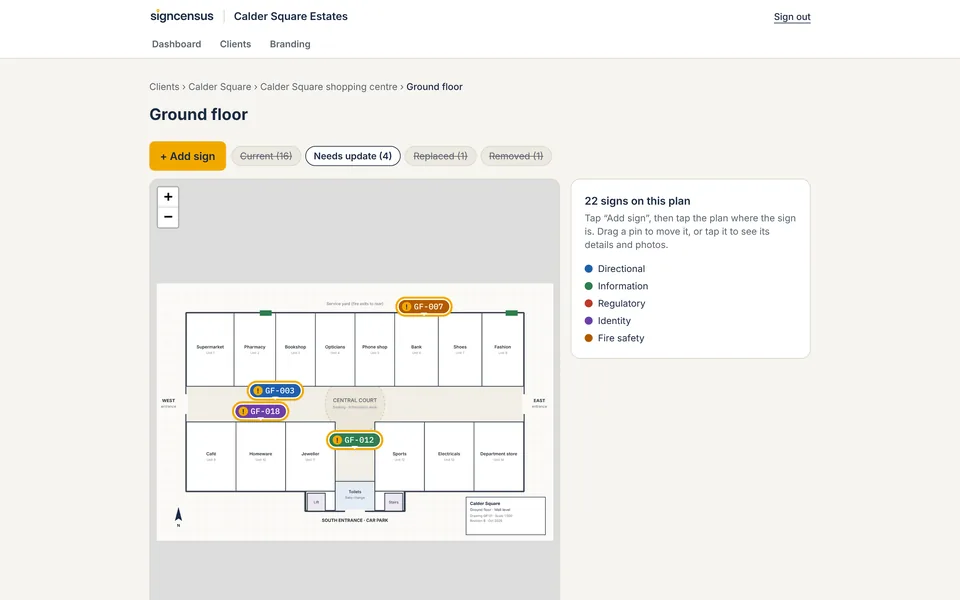
The most common cause of rebrand overruns is signs nobody knew about: the rear service door sign, the car park totem, the vinyl on a meeting room glass. Start with a signage audit of every site, recording each sign that carries the old name, logo or colours, its size, material and fixing, and a photo.
Mark each one with an action: replace, reface (new face in the existing frame), re-vinyl, remove, or keep.
2. Group, design and quote
Filter the schedule by sign type and size. Most estates turn out to have a manageable number of distinct sign types, and the design work and manufacturing price are built around those types, not individual signs.
- Design one standard sign per type, with agreed size variants.
- Price each type and variant, then multiply by the counts from the schedule.
- Flag the one-offs (listed buildings, unusual shapes, shared landlord signs) to price individually.
3. Check consents early
- Advertisement consent. In England, many illuminated signs and larger signs need express consent from the local planning authority under the advertisement regulations. Scotland, Wales and Northern Ireland have their own rules.
- Listed buildings and conservation areas. Listed building consent may be needed even where advertisement consent isn't.
- Landlords. Leases usually need the landlord's approval for external signs, and shopping centres often have their own signage rules.
This is general information, not legal advice. Check with the local planning authority for each site.
4. Phase the installation
- Group sites by region to keep install teams travelling efficiently.
- Do flagship or high-visibility sites first if the launch date matters.
- Keep old and new brands from appearing on the same site for long: do each site's external signs in one visit where possible.
- Give each install team the plan and schedule for their site, filtered to that site's actions.
5. Close each site off
As each sign is installed, update its record with the new photo and status. When the last site is done, the client has an up-to-date record of their whole estate, which is the starting point for maintenance and the next change.
Signcensus keeps the plan, pins, photos and status for every site in one place, so you can see at a glance what's left to do. Start a free trial.
Questions
- Do I need planning permission to change a shop sign?
- Often, yes. In England many illuminated and larger signs need advertisement consent from the local planning authority, and listed buildings may also need listed building consent. Replacing a sign like-for-like can still need consent if it is illuminated. Check with the local planning authority for each site.
- How do you quote a rebrand across many sites?
- Audit every site, group the signs by type and size, price each standard type, multiply by the counts, then add one-offs, access equipment, consents and installation days.