
Start with a baseline
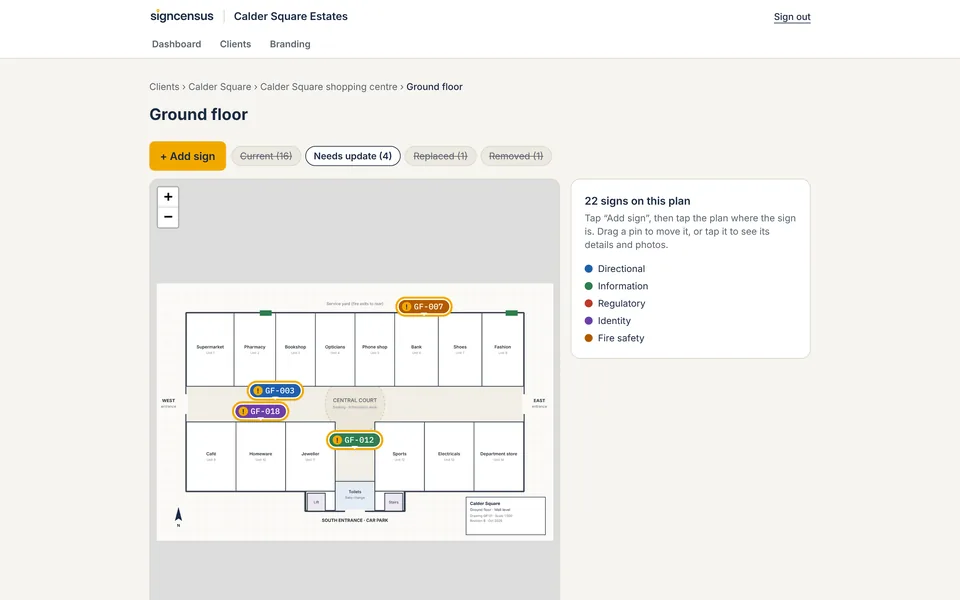
You can't maintain what you can't list. A signage audit gives every sign a reference number, a place on the plan, photos and a condition. That is the baseline everything else updates.
Check regularly
- Safety and fire signs: review them with the fire risk assessment and after any change to the layout.
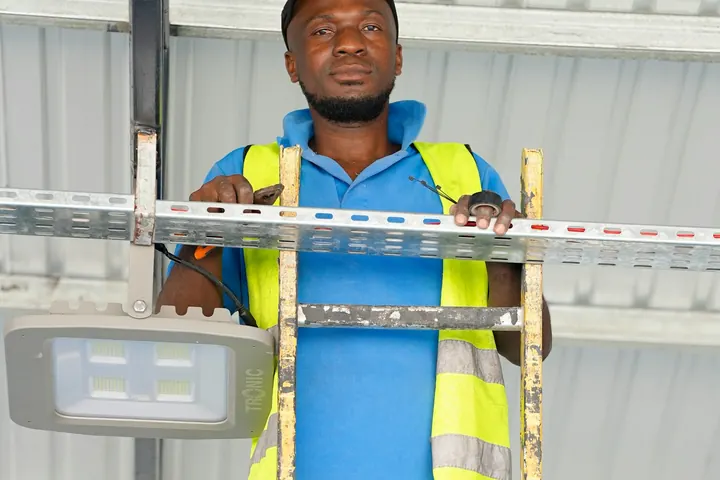
- Illuminated signs: check they work, and have electrical and structural checks done by competent people.
- Large and high-level signs: have fixings and structures inspected, especially after storms.
- Wayfinding: check after any change to rooms, departments or tenants.
Make faults easy to report
Ask site teams to report a fault against the sign's reference number with a photo. A contractor can then see the size, material, fixing and location before they visit, and often fix it in one trip.
Keep the record live
Every install, repair and removal should update the sign's record. An up-to-date record turns the next rebrand, tender or audit from a full survey into a quick check. Signcensus keeps that record for every site, with every change logged.
Questions
- How often should signs be inspected?
- There is no single legal frequency for signs in general. Safety signs should be reviewed with the fire risk assessment, illuminated and large structural signs need periodic electrical and structural checks, and everything else is usually checked on a routine site walk.