
Audit, schedule and register: the difference
| Term | What it is | When it's used |
|---|---|---|
| Signage audit | A survey of what's on site and what needs doing | At a point in time |
| Sign schedule | The table of signs produced for a project | Quoting, manufacture, installation |
| Signage asset register | The maintained record of every sign owned | All the time, updated as work is done |
What to include
- Reference: a unique ID that never changes or gets reused.
- Location: site, building, floor and a position on a plan, plus GPS outdoors.
- Description: type, content, size, material, illumination and fixing.
- Ownership: who owns and who maintains it (for example landlord, tenant or council department).
- Condition and action: current condition and what needs doing.
- Photos: current photos, kept with the record.
- History: when it was installed, repaired or changed, and by whom.
How to build one
- Agree sign types and fields that will work across every site.
- Run a signage audit of each site to create the first records.
- Make one team responsible for the register.
- Require every contractor's install, repair and removal to update it, with a photo.
- Review it with routine site walks, and in full before a rebrand or new contract.
Spreadsheet or software?
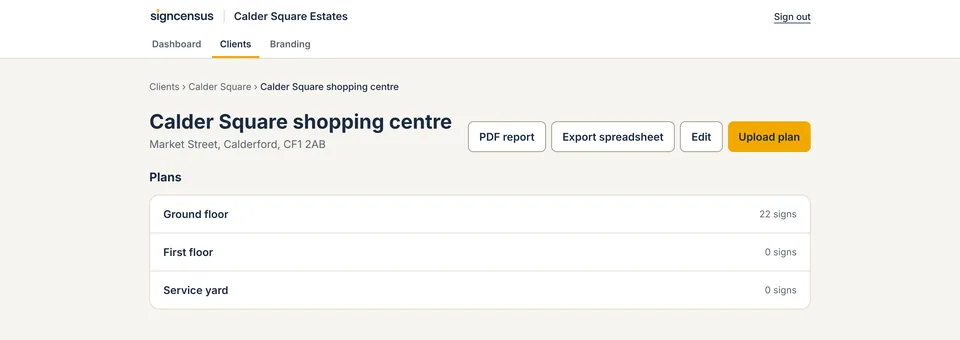
A spreadsheet can hold a small register, but photos, plan positions and change history are hard to keep with it. See spreadsheets vs signage software. Signcensus keeps each sign's plan position, photos, details and full change history in one record.
Questions
- Who should own a signage asset register?
- Usually the estates, property or facilities team. A sign company can build and maintain it for a client as part of a maintenance contract.
- How is a signage asset register different from a signage audit?
- An audit is a survey at one point in time. A register is the record that is kept up to date afterwards, as signs are installed, repaired and removed.